Automatic transfer switch (ATS) fundamentals | Eaton PSEC
15:01
Learn how automatic transfer switches maintain continuous power to critical facilities by shifting electrical loads between utility and backup sources, the difference between open and closed transition, UL 1008 standards, and more. In this video, Charlie Hume, Eaton ATS Product Manager, explains the types of transfer switches: Automatic transfer switches (ATS) – automatically initiates a transfer Non-automatic – electrically operated but transfer initiation is made via a selector switch or button Manual – fully mechanical, requires human action to initiate and carry out transfer Switching mechanisms and the pros and cons to each type. White paper referenced in the video may be found here: 3-Pole and 4-Pole Transfer Switch Switching Characteristics: https://www.eaton.com/content/dam/eaton/markets/healthcare/knowledge-center/white-paper/3-pole-and-4-pole-transfer-switch-switching-characteristics.pdf System configurations that include single and dual utility sources, standby generators, and integrating renewable energy sources. How mission-critical facilities can use a bypass isolation ATS to isolate and service the transfer switch without interrupting power to the load. Lastly, Charlie also discusses UL 1008 and Withstand and Closing Rating (WCR). Learn more on a transfer switch’s ability to close into and withstand a fault current, Short-Circuit WCRs: https://videos.eaton.com/detail/video/6085670625001/short-circuit-wcrs?autoStart=true&q=short-circuit Thank you for watching one of our many educational videos on the topic of power systems. Schedule a visit to one of Eaton's Power Systems Experience Centers in either Pittsburgh or Houston to learn more! To learn more about Eaton products and our Power Systems Experience Centers: https://eaton.com/experience To view more educational videos from Eaton's Power Systems Experience Centers: https://videos.eaton.com/experience Chapters 00:00 00:16 Intro 00:39 What is and ATS 01:25 Types of transfer switches 02:37 ATS switching mechanisms 04:04 ATS configurations 06:04 ATS open transition explained 07:49 Open in-phase transition 08:25 ATS closed transition explained 09:34 3 and 4 pole transfer switches 10:37 Service entrance ATS 11:21 Bypass isolation ATS 12:51 Withstand current rating (WCR) #ATS #automatic #transferswitch #electricaltrainingvideos #electricalengineering #powerquality #powerqualityissues #powersystem #engineering #eatonexperience #experiencecenter #powerdistribution #powersystemdesign
Learn how automatic transfer switches maintain continuous power to critical facilities by shifting electrical loads between utility and backup sources, the difference between open and closed transition, UL 1008 standards, and more. In this video, Charlie Hume, Eaton ATS Product Manager, explains the types of transfer switches: Automatic transfer switches (ATS) – automatically initiates a transfer Non-automatic – electrically operated but transfer initiation is made via a selector switch or button Manual – fully mechanical, requires human action to initiate and carry out transfer Switching mechanisms and the pros and cons to each type. White paper referenced in the video may be found here: 3-Pole and 4-Pole Transfer Switch Switching Characteristics: https://www.eaton.com/content/dam/eaton/markets/healthcare/knowledge-center/white-paper/3-pole-and-4-pole-transfer-switch-switching-characteristics.pdf System configurations that include single and dual utility sources, standby generators, and integrating renewable energy sources. How mission-critical facilities can use a bypass isolation ATS to isolate and service the transfer switch without interrupting power to the load. Lastly, Charlie also discusses UL 1008 and Withstand and Closing Rating (WCR). Learn more on a transfer switch’s ability to close into and withstand a fault current, Short-Circuit WCRs: https://videos.eaton.com/detail/video/6085670625001/short-circuit-wcrs?autoStart=true&q=short-circuit Thank you for watching one of our many educational videos on the topic of power systems. Schedule a visit to one of Eaton's Power Systems Experience Centers in either Pittsburgh or Houston to learn more! To learn more about Eaton products and our Power Systems Experience Centers: https://eaton.com/experience To view more educational videos from Eaton's Power Systems Experience Centers: https://videos.eaton.com/experience Chapters 00:00 00:16 Intro 00:39 What is and ATS 01:25 Types of transfer switches 02:37 ATS switching mechanisms 04:04 ATS configurations 06:04 ATS open transition explained 07:49 Open in-phase transition 08:25 ATS closed transition explained 09:34 3 and 4 pole transfer switches 10:37 Service entrance ATS 11:21 Bypass isolation ATS 12:51 Withstand current rating (WCR) #ATS #automatic #transferswitch #electricaltrainingvideos #electricalengineering #powerquality #powerqualityissues #powersystem #engineering #eatonexperience #experiencecenter #powerdistribution #powersystemdesign
Oil and gas Similar Videos
-
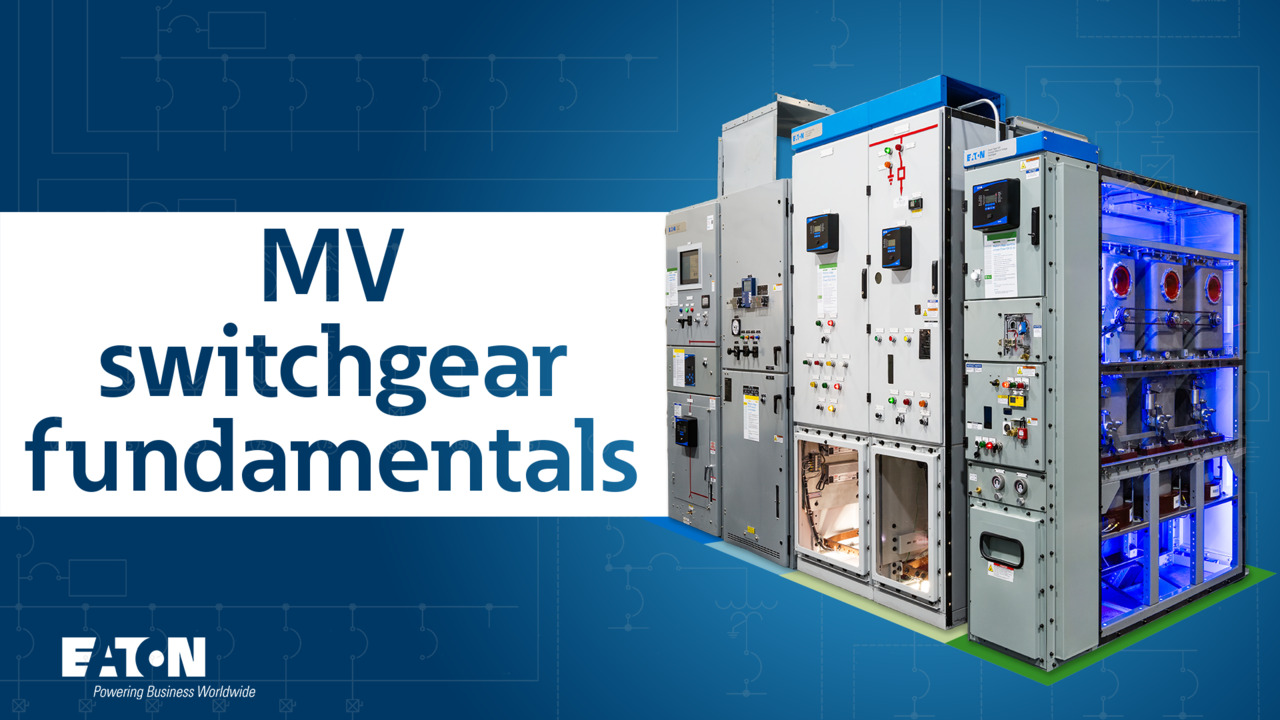
Medium-voltage switchgear fundamentals | Eaton PSEC
15:50
Explore medium-voltage switchgear types including metal-clad, metal-enclosed, and compact switchgear. Learn key standards, design features, and advancements that enhance reliability, reduce downtime, and improve protection in power systems.
-
Reading electrical one line drawings | Eaton PSEC
19:13
Electrical one-line diagrams are drawings that represent an electrical system by detailing the components, how they are connected, and the power flow. Watch to learn the common symbols and how to correctly read one-line drawings.
-
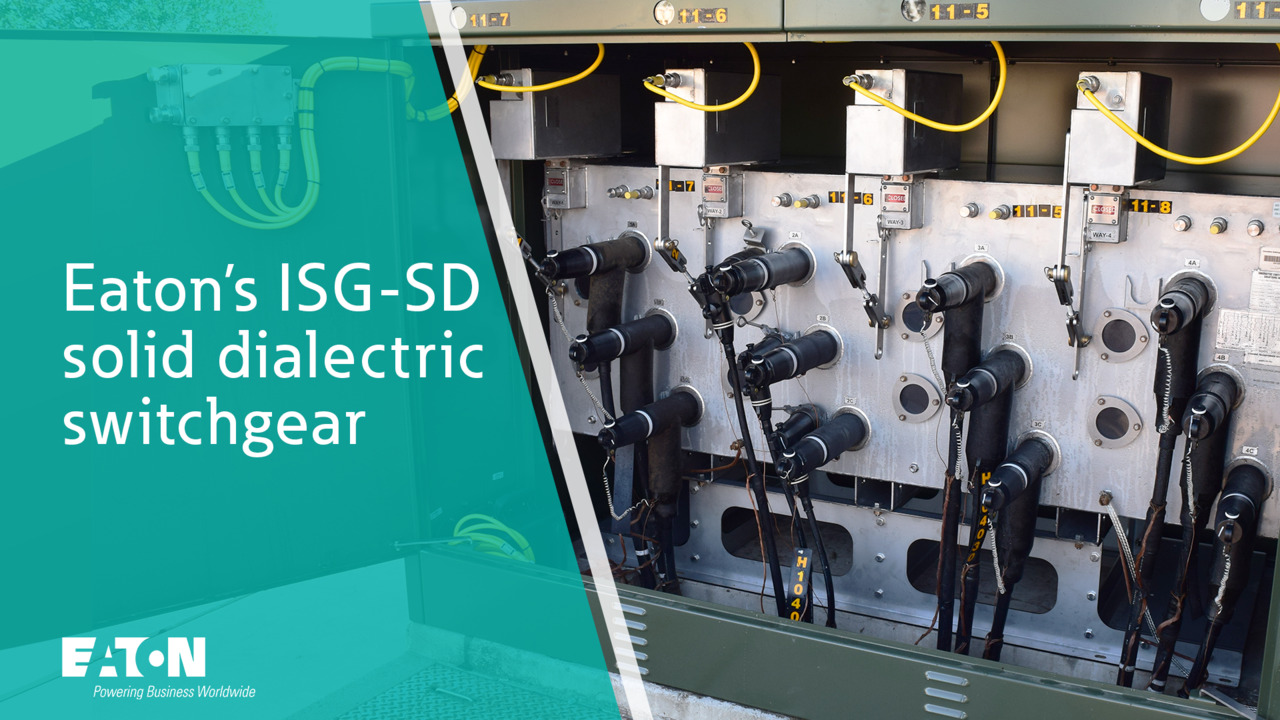
ISG-SD solid dielectric switchgear overview | Eaton PSEC
7:05
Eaton’s ISG-SD solid-dielectric switchgear is virtually maintenance-free, contains no dielectric gas or fluids, and compact. It is also highly configurable with padmount, submersible, vaultmount and wallmounted options available.